
Christopher Nolan is not okay
With "The Odyssey," Nolan has made his third film in a row about the end of the world and intergenerational guilt

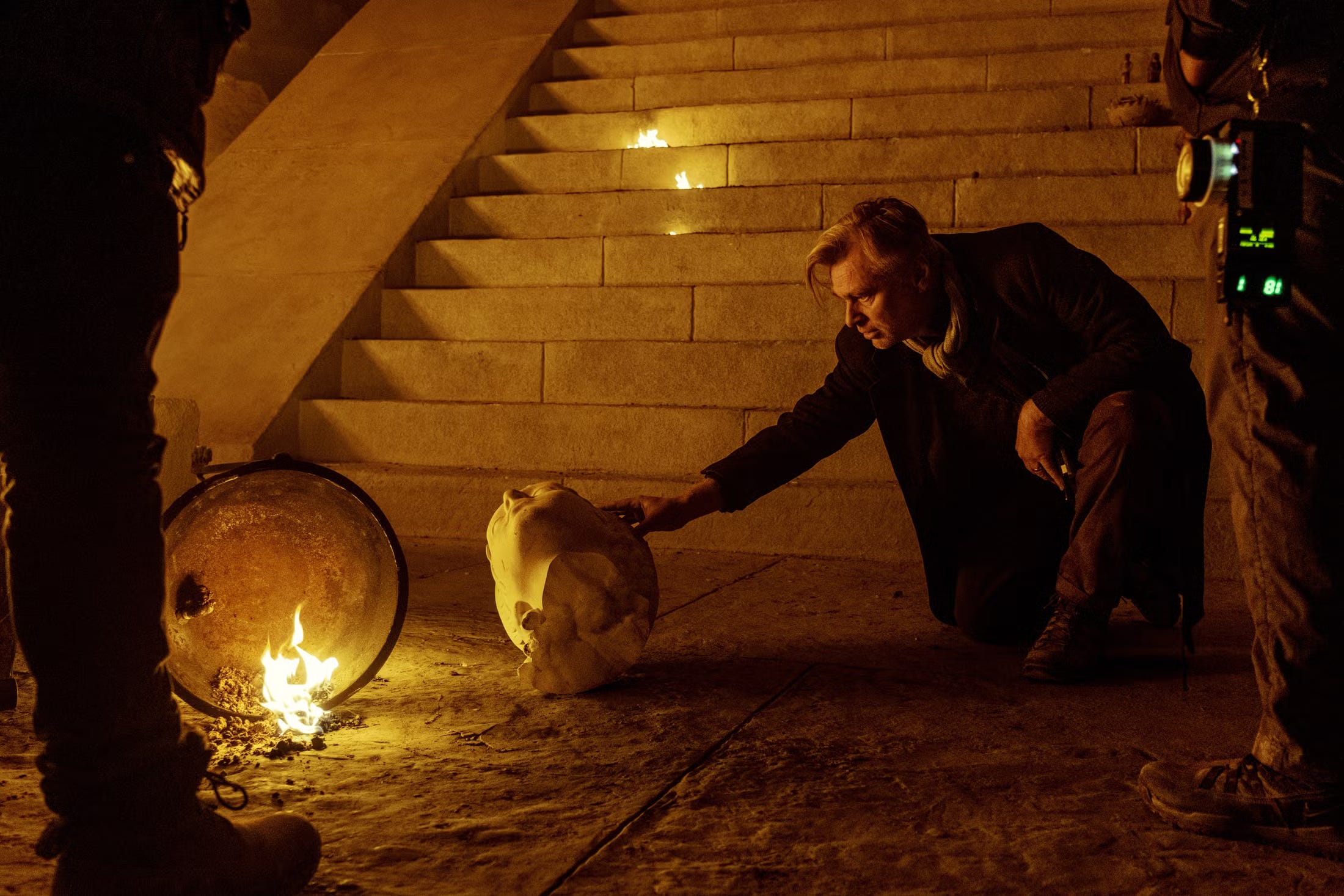
Christopher Nolan is not okay. I mean that mostly as a compliment. The evidence is in theaters right now: The Odyssey, three hours of IMAX-scale myth about a man being punished.
Odysseus spends 20 years trying to get home. He is blown across the sea by a god he wronged; he loses every man who sailed with him. And the home he is trying to reach has stopped resembling the one he left. Suitors eat his food, drink his wine, and harass his queen. Odysseus’s son Telemachus, meanwhile, has grown up inside the wreckage of his absence, impotently guarding what remains of a fractured kingdom while waiting on a father who may never come.
Talking to Empire, Nolan called the sea “vast and terrifying and wonderful and benevolent,” and described “the leap of faith that was being made in an unmapped, uncharted world.” Of every myth available, every story he could tell at blockbuster scale, this is the one he chose: the story of a man whose own deeds caused him to lose his crew, his family, his home, and his faith in the future.
And that is the theme Nolan cannot put down: generational guilt. The suspicion that we are handing our children a world worse than the one we were handed, and that they will — rightly — hold this against us. That we will never be forgiven.
The Odyssey is the third original feature he has made since 2016 — since Brexit, since Trump. (Dunkirk I’m setting aside; it was written and shot before the break.) All three turn on this deep-seated anxiety, each in its own register.
In Tenet, the first of the three, the guilt is more subtextual. When the villain explains why the future is working with him to declare war on the present, he says: “Their oceans rose and their rivers ran dry.” Then the movie hurries on to the next reversed car chase.
(I think. I’ve seen the film at least three times and still believe I only vaguely understand what happens in it.)
When Tenet came out, some climate writers read the line as an evasion. An “exculpatory fantasy,” one called it — blaming a vengeful future for a catastrophe the present is busy causing. I think they had it backwards. Nobody in the film ever answers the charge. No one stands up to say the future is wrong about us. The accusation hangs there, without a rebuttal.
The guilt in Oppenheimer, meanwhile, is obvious and unrelenting.
The film ends with a quiet conversation by a pond between “Oppie” and Einstein. The former reminds the latter of their old fear that the bomb, when it was sparked for the first time, might ignite the atmosphere of the whole world, destroying it entirely. Then, the iconic final line: “I believe we did.”
In Oppenheimer, the missiles fly. In The Odyssey, the walls of Troy collapse. In both cases, the world burns.
A guilt this profound stands one short step from despair: if the damage is already made, after all, then nothing can be done and the future is already written. Nolan does not take that step. Oppenheimer, he has said, is “a movie about consequences.”
His films are not fatalistic declarations that doom is inevitable. They’re warnings — multimillion-dollar warnings — that everything we do, including the things we don’t do, comes with a cost. Tenet said it plainly. “What’s happened, happened,” a character explains. “Which is an expression of faith in the mechanics of the world,” he adds, “not an excuse to do nothing.”
The past is closed. The future is not. Nolan has spent 10 years looking straight at what we are doing to the people who will come after us, and — to his credit — he is not okay with it. How could he be?